
Sub-Zero not cooling in Cupertino? Start here.
A built-in that drifts warm rarely fails all at once. Match your symptom below before it turns a small fix into a sealed-system job.
If your Sub-Zero is not cooling, first confirm it has power, the condenser grille is clear, and the interior vents are not blocked by packed food. If it is still warm an hour later, stop — running a failing unit longer can enlarge the repair. The most common Cupertino causes are a frost-blocked evaporator, a failed fan, a stuck damper or a dirty condenser. We diagnose to factory spec for an $89 service call that is waived with the repair, with a 365-day labor warranty.
925 reviews · 4.9 / 5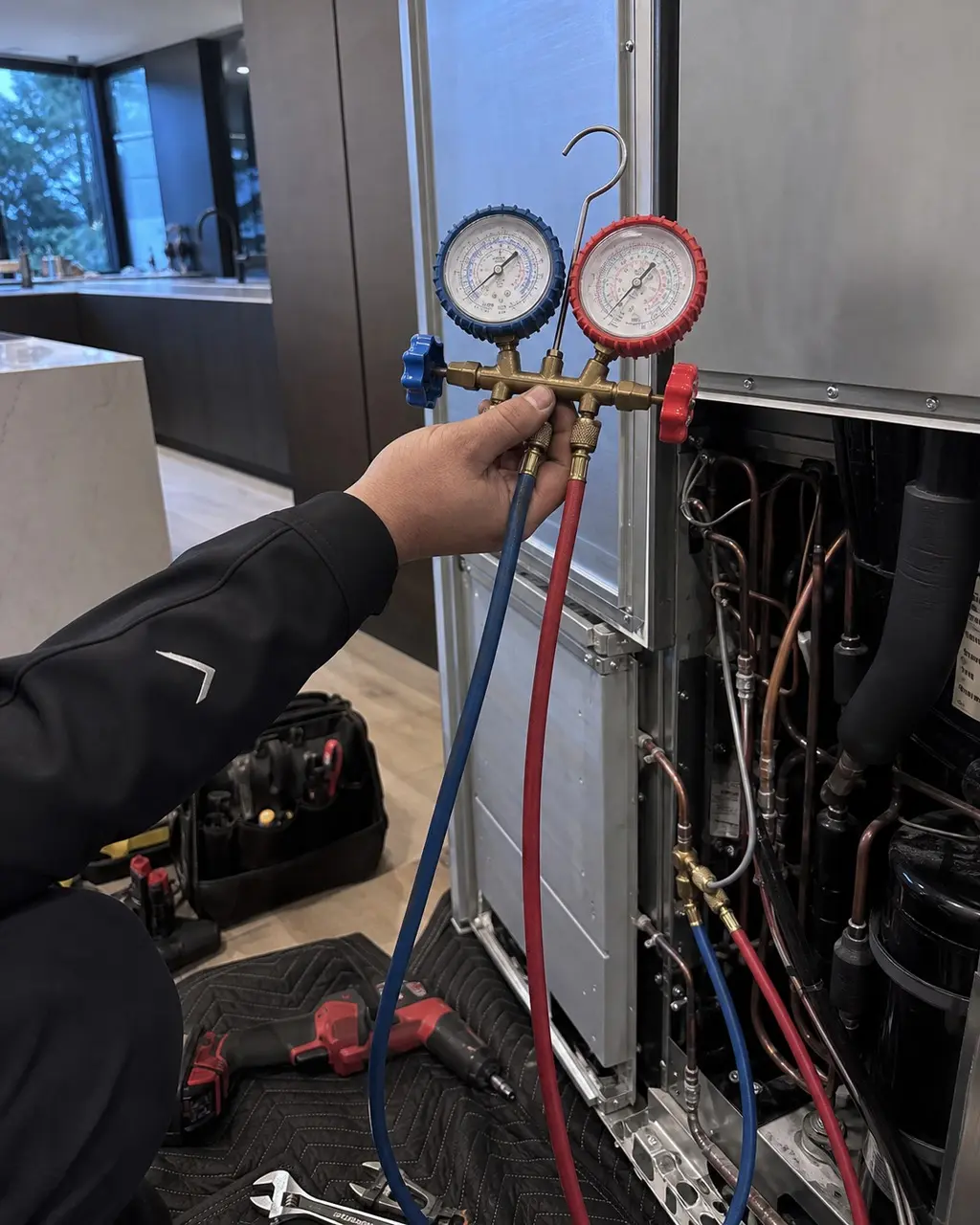
Symptom → likely cause → what to do
A quick map from what you are seeing to the most probable fault on an integrated Sub-Zero.
| What you see | Likely cause | What to do |
|---|---|---|
| Fridge warm, freezer fine | Evaporator frost, failed fresh-food fan, or stuck damper | Stop loading the fridge side; book diagnosis before food loss |
| Both compartments warm | Dirty condenser, condenser fan, or sealed-system loss | Clear the grille; if still warm in 1 hr, power down and call |
| Runs constantly, never cold enough | Door seal leak, frost-blocked coil, or low charge | Check the gasket seals fully; avoid opening repeatedly |
| Short-cycling on and off | Failing start components or control board | Do not keep resetting power — note the pattern for the tech |
| Temp alarm / flashing display | Sensor fault or a real temperature excursion | Photograph it and decode your alarm light; move perishables |
Ranges and causes are typical for built-in Sub-Zero units; your exact fault is confirmed on site.
What to check before you call
Five safe checks that take five minutes and often explain the problem.
- 01
Confirm power
Verify the unit has power and the breaker has not tripped. Built-ins are often on a dedicated circuit behind the cabinet.
- 02
Clear the condenser
Open the upper grille and look for a dust-blanketed condenser. Heavy lint is a leading cause of warm built-ins in dusty remodels.
- 03
Free the vents
Make sure interior air vents are not packed with food. Sub-Zero relies on precise airflow between zones.
- 04
Test the seals
Close the door on a slip of paper; if it slides out easily, a tired gasket may be letting warm air in.
- 05
Note the behavior
Warm side, run pattern, any alarm code. Those details speed up a factory-spec diagnosis.
What not to do yourself
A panel-ready Sub-Zero is integrated into custom cabinetry and tied to a sealed refrigeration circuit. A few well-meant moves make repairs larger and riskier:
- Do not keep power-cycling. Repeated restarts on a failing compressor can damage the start components and the board.
- Do not force the unit out. Pulling a built-in without releasing it from the enclosure can scratch the fascia or chip stone — that is the expensive part of a Cupertino kitchen.
- Do not add “refrigerant” from a kit. A sealed system needs evacuation, a measured charge and leak proof — guesswork voids the repair and can total the unit.
- Do not defrost with heat or sharp tools. You can puncture the evaporator and turn a $400 fix into a sealed-system replacement.
If the compartment is still warm after an hour of correct airflow, power the unit down and move perishables. Continuing to run it is the single most common way a minor fault becomes a sealed-system job.
When “not cooling” means the sealed system
Most warm built-ins are airflow or control faults — a frost-blocked evaporator, a tired fan, a stuck damper or a dirty condenser. A smaller share are true sealed-system failures: a refrigerant leak, a restriction, or a worn compressor.
We only call it a sealed-system repair after proving it — pressures, electrical readings and temperature behavior. That honesty matters because sealed-system work is the most expensive category, and many units sent for “compressor replacement” actually need a fan or a board. If yours genuinely needs it, see sealed system & compressor service.
What a not-cooling repair typically costs
Most warm-unit repairs are airflow or control parts. The $89 diagnostic is waived when you book the repair.
| Service | Range | Time | Notes |
|---|---|---|---|
| Diagnostic / service call | $89 | 45–90 min | Waived when you book the repair — model, temps, airflow, fascia/panel check |
| Door gasket / frost-line | $400–$950 | 1–3 h | Depends on model and gasket availability |
| Ice maker / water line | $290–$880 | 1–3 h | Valve, fill tube or ice module |
| Panel-ready pull-out & reseat | $250–$600 | 1–2 h | Cabinet-safe extraction, no fascia damage |
| Control board / sensor | $360–$1,300 | 1–4 h | Quote after electrical proof |
| Compressor / sealed system | $1,500–$3,800 | 2–6 h + parts | Requires pressure / electrical evidence |
Draft ranges for planning; final quote depends on model, parts, cabinet access and diagnosis.
What Cupertino homeowners say
Fridge side went warm overnight while the freezer stayed frozen. They spotted a frost-blocked evaporator and a weak fan, cleared it, and replaced the fan the same visit. The $89 call came off the bill and it has been rock solid since.
Our built-in was running nonstop and never getting cold. Turned out to be a filthy condenser plus a tired door gasket — not the compressor another company tried to sell us. Honest diagnosis saved us thousands.
Temp alarm at 7am before work. They talked me through powering it down, came same day, and traced it to a sensor — not a sealed-system failure. Genuine part, 365-day warranty, and zero damage to our cabinetry.
Frequently asked questions
Why is my Sub-Zero freezer cold but the fridge warm?
That split-temperature pattern usually points to the fresh-food side: a frost-blocked evaporator, a failed circulation fan, or a stuck air damper between the zones. Because the freezer still works, the sealed system is often fine — which makes this one of the less expensive repairs if caught early.
How long can a Sub-Zero run warm before it causes damage?
If it is still warm an hour after you have cleared the condenser and vents, power it down. Continuing to run a failing compressor or sealed system is the main way a modest repair becomes a major one. Move perishables and book a diagnosis.
Is a warm Sub-Zero usually a compressor problem?
Rarely. Most warm built-ins are airflow or control faults — frost, fans, dampers or a dust-blanketed condenser. True compressor or sealed-system failures are a minority, and we confirm them with pressure and electrical proof before quoting.
Can you come same-day for a not-cooling Sub-Zero in Cupertino?
Often, yes. We reserve same-day and next-day windows for Cupertino and the nearby South Bay cities whenever the schedule allows, and a warm built-in is exactly the kind of call we try to prioritize. Call early in the day, have your model number ready, and describe what the unit is doing — which compartment is warm and any alarm code — so we arrive with the most likely parts already on the van.
My display shows a temperature alarm — what should I do?
Photograph the alarm or code, move anything perishable, and avoid repeatedly clearing it. The code helps us separate a sensor fault from a real temperature excursion before we arrive, so the right part is on the van.
What does the diagnosis cost?
The service call is $89, and it is waived the moment you approve the repair, so a diagnosis that turns into a fix effectively costs nothing extra. You always get a written quote before any work begins, we install genuine, factory-certified OEM Sub-Zero parts, and every repair is backed by a 365-day labor warranty. See repair pricing for planning ranges by symptom.
Related Sub-Zero help

Warm Sub-Zero? Let’s catch it before it grows.
Talk to a built-in specialist now. Same-day and next-day diagnosis across Cupertino and the South Bay when the schedule allows.
925 reviews · 4.9 / 5$89 service call, waived when you book the repair · 365-day warranty on all labor.