
Sub-Zero maintenance tips for Cupertino built-ins
Most warm built-ins in dusty Apple-area remodels trace back to one neglected job: a dust-blanketed condenser. A few habits a year keep an integrated Sub-Zero cold, quiet and out of the repair queue.
The single most valuable Sub-Zero maintenance task is cleaning the condenser every six to twelve months — a dust-blanketed condenser is the leading cause of warm built-ins in Cupertino remodels. Beyond that: wipe and inspect door gaskets, change the water filter twice a year, hold the fridge near 38°F and the freezer near 0°F, and keep vents and the grille clear. If anything drifts warm, we diagnose to factory spec for an $89 service call that is waived with the repair, backed by a 365-day labor warranty.
925 reviews · 4.9 / 5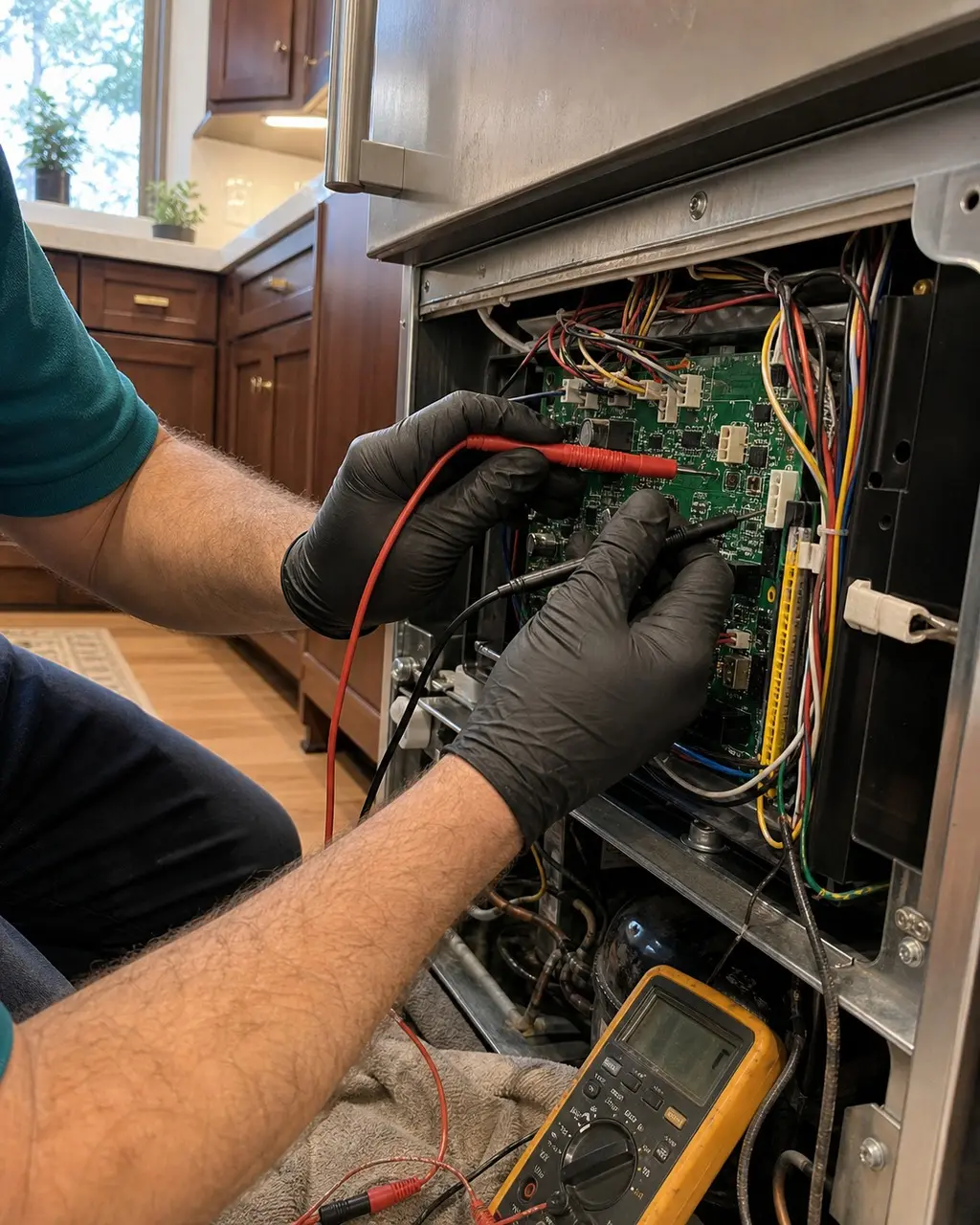
How to clean a Sub-Zero condenser
The highest-payoff maintenance job you can do yourself. Plan on fifteen minutes, twice a year — more often if you are near construction or have shedding pets.
- 01
Power down first
Switch the unit off at the control panel or pull its dedicated breaker. You are working near a fan, and built-ins sit on their own circuit behind the cabinet.
- 02
Open the upper grille
On most built-in and column Sub-Zeros the condenser hides behind the grille at the top. Release the clips or screws and set the grille aside carefully so the fascia stays unmarked.
- 03
Vacuum the dust blanket
Use a soft brush attachment to lift the felt-like layer of lint off the condenser fins. In a remodel-heavy area like Cupertino this can be surprisingly thick — that blanket is exactly what makes a built-in run warm.
- 04
Brush the fins gently
Work a soft coil brush along the direction of the fins, never across them. Bent fins choke airflow as badly as dust, so let the brush do the work without forcing it.
- 05
Wipe the surround and fan
Clear dust from the fan blade and the floor of the compartment. Trapped lint here recirculates straight back onto the clean condenser within weeks.
- 06
Refit and restore power
Reseat the grille flush, restore power, and confirm the fan spins and the unit starts a normal cooling cycle. Note the date so the next clean lands six to twelve months out.
Your Sub-Zero maintenance schedule
A simple calendar for an integrated built-in. Cupertino kitchens near remodels or construction should lean toward the shorter intervals.
| Task | Frequency | Why it matters |
|---|---|---|
| Clean the condenser | Every 6–12 months | A dust-blanketed condenser is the number-one cause of warm built-ins and overworked compressors |
| Wipe and inspect door gaskets | Every 3 months | Clean, supple seals keep humid air out; a leaking gasket forces constant running and frost |
| Change the water filter | Every 6 months | Maintains ice and water quality and protects the fill valve from sediment buildup |
| Check temperature settings | Quarterly | Fridge near 38°F and freezer near 0°F balances food safety against energy and frost |
| Clear interior vents | Monthly | Sub-Zero relies on precise airflow between zones; packed food blocks circulation |
| Confirm grille airflow clearance | Quarterly | Blocked toe-kick or top grille traps heat the condenser needs to shed |
| Flush and clean the drain / drip area | Every 6 months | Prevents standing water, odor and ice-maker pooling under the crisper |
| Professional tune-up & airflow check | Yearly | Factory-spec diagnostics catch a weak fan or tired gasket before it strands your kitchen |
Intervals are guidance for built-in Sub-Zero units; dusty remodels, pets and heavy use shorten them.
Gaskets, filters and temperature — the details that matter
The condenser does the heavy lifting, but three smaller habits decide whether your built-in coasts or struggles between visits.
Door gasket care
Wipe the gaskets with warm water and a soft cloth — never solvents, which dry the magnetic seal and shorten its life. Run your finger along the seal looking for tears, flat spots or grime that breaks contact. Test it the simple way: close the door on a slip of paper and tug. If it slides out with no resistance, the seal is letting humid Cupertino air in, which shows up as frost, sweat on the fascia and a unit that runs warm and never quite catches up.
Water filter changes
Plan on a fresh filter roughly every six months, sooner if water tastes off or ice slows down. A spent filter does not just dull the water — sediment can creep into the fill valve and lead to weak ice or pooling. If you are unsure which cartridge your unit takes, look it up by model on our model and serial lookup before you order so the part matches the first time.
Temperature settings
Hold the fresh-food side around 38°F and the freezer near 0°F. Colder is not safer — it invites frost, burns energy and stresses the sealed system. Give a freshly stocked unit a few hours to recover before you judge the temperature, and avoid cramming food against the interior vents, since Sub-Zero balances zones by airflow, not brute cold. Always use genuine OEM Sub-Zero parts for filters and gaskets so tolerances stay within Sub-Zero service specifications.
What you can do yourself — and when to call us
Most maintenance is genuinely homeowner-friendly. These tasks are safe, make a real difference, and never touch the refrigeration circuit:
- Cleaning the condenser, fan area and grilles.
- Wiping and inspecting door gaskets.
- Swapping the water filter and clearing the drip area.
- Checking temperatures and keeping interior vents clear.
Hand the rest to an experienced Sub-Zero repair specialist. Call us if the unit drifts warm after a thorough condenser clean, if a gasket is torn rather than just dirty, if you see frost on the back wall, hear new compressor or fan noise, or if a display throws a temperature alarm:
- Pulling a panel-ready built-in — releasing an integrated unit from custom cabinetry without scratching the fascia or chipping stone is cabinet-safe work, not a DIY tug.
- Anything inside the sealed system — refrigerant, the compressor and the evaporator need factory-grade tools and measured procedures, never a top-up kit.
- Electrical and control faults — boards, sensors and dampers should be diagnosed with factory-spec readings before any part is replaced.
A yearly professional tune-up pairs a full airflow and gasket check with factory-spec diagnostics, so a weak fan or a low charge is caught while it is still a small repair. See typical repair pricing or read about full built-in refrigerator service.
Warning signs and what to do next
Catch a built-in drifting out of spec early. Use this to tell the maintenance you can safely handle from the symptoms that mean it is time to book a Sub-Zero specialist.
| Warning sign | What it usually means | Do this |
|---|---|---|
| Warm spots or food spoiling faster | Dust-blanketed condenser, packed vents, or a tired door gasket letting humid air in | Safe DIY: clean the condenser, clear interior vents and test the gasket. Still warm an hour later? Book a diagnosis |
| Heavy frost on the back wall or freezer | A failing defrost cycle or a gasket leaking moist air into the cabinet | Specialist: do not chip or melt the ice with heat or tools — you can puncture the evaporator. Book a repair |
| Water pooling on the floor or under the crisper | A clogged drain line or drip area, or sometimes the water filter line | Safe DIY: flush and clean the drain and drip area. If water returns or comes from behind the unit, call us |
| New loud or rattling running noise | A worn condenser or evaporator fan, or a strained compressor working against dust | Clean the condenser first; if the noise stays after the unit has cooled, book a fan or motor check |
| Condensation or sweat on the fascia and seals | A flat or torn door gasket breaking contact, common in humid Cupertino kitchens | Safe DIY: wipe the gasket and run the paper-slip test. A torn seal needs a genuine OEM gasket fitted |
| Ice slowing down or tasting off | A spent water filter, sediment in the fill valve, or a partial water-line restriction | Safe DIY: change the filter every six months. No improvement after a fresh one? Book a water-line check |
Front-accessible cleaning, gaskets, filters and vents are homeowner-friendly; anything behind the cabinet panel or inside the sealed system is specialist work. Diagnostics run an $89 service call that is waived with the repair.
Quick Sub-Zero maintenance answers
Fast answers to the questions Cupertino homeowners ask most about keeping a built-in healthy.
How often should I clean my Sub-Zero condenser?
Every six to twelve months for most homes, and toward the six-month end if you live near an active remodel, have pets, or run the unit hard. Dust-blanketed condensers are the leading cause of warm built-ins in Cupertino, so this one habit prevents more service calls than any other.
What temperature should my Sub-Zero be set to?
Aim for about 38°F in the fresh-food section and 0°F in the freezer. Colder settings waste energy and encourage frost without making food meaningfully safer. Recheck quarterly and after big restocks.
How do I know if my door gasket needs replacing?
Close the door on a slip of paper and pull — strong resistance is good. If it slides free, or you see tears, flat spots or fascia sweat, the seal is failing and should be replaced with a genuine OEM gasket.
Does maintenance really prevent expensive repairs?
Yes. A clean condenser and a healthy gasket keep the compressor from overworking, which is what turns a modest fault into a sealed-system job. A yearly tune-up catches weak fans and low charges early, while the fix is still small.
What Cupertino homeowners say
We live two doors from a gut remodel and our built-in started running warm. The tech showed me a condenser packed solid with construction dust, cleaned it, and walked me through doing it myself twice a year. The $89 call was waived once we approved a new fan. Cold again and quiet.
Booked the yearly tune-up before it became an emergency. They checked airflow, found a gasket starting to flatten, and replaced it with a genuine OEM seal before it caused frost. Clean, on time, and they protected our floors the whole visit. Worth every dollar to avoid a warm-fridge weekend.
Ice had gone slow and the water tasted off. Instead of upselling, they swapped the filter, flushed the drip area, and showed me which cartridge matches our model. Simple maintenance fix, fair price, and the 365-day warranty on the small parts they did replace. Honest crew.
Frequently asked questions
How do I clean the condenser on a built-in Sub-Zero?
Power the unit down, open the upper grille, and use a soft brush attachment to lift the dust blanket off the condenser fins. Brush gently along the fins, never across, then clear lint from the fan and floor before refitting the grille and restoring power. Do this every six to twelve months — more often in dusty Cupertino remodels, where condenser dust is the top cause of warm built-ins.
How often should I change the water filter?
Roughly every six months, or sooner if water tastes flat or ice production slows. A spent filter dulls water quality and can let sediment reach the fill valve, which leads to weak ice or pooling. Match the cartridge to your exact model so it seats and seals correctly.
Why is my Sub-Zero running constantly even though it feels cold?
The usual culprits are a dust-blanketed condenser or a tired door gasket letting humid air in, both of which force the compressor to run nonstop. Clean the condenser and test the seal first. If it still runs constantly, book a diagnosis before the extra load reaches the sealed system.
Is it safe to vacuum the condenser myself?
Yes, with the unit powered off and a soft brush attachment. Work gently so you lift dust without bending the fins, and avoid touching wiring or the compressor. Cleaning the condenser, gaskets, vents and drip area is all homeowner-friendly; anything inside the sealed system or behind the cabinet panel is specialist work.
How do I keep my panel-ready built-in from getting damaged during maintenance?
Stick to the front-accessible tasks — condenser, gaskets, filter and vents — and never try to slide an integrated unit out of its cabinetry yourself. Releasing a panel-ready Sub-Zero without scratching the fascia or chipping stone is cabinet-safe work we handle with the floor and surround protected.
What does a professional Sub-Zero tune-up cost?
A visit starts at the $89 service call, which is waived when you book a repair. A tune-up pairs an airflow, gasket and temperature check with factory-spec diagnostics, we fit genuine OEM parts where needed, and all labor carries a 365-day warranty.
Related Sub-Zero help

Want your Sub-Zero checked before it acts up?
Book a factory-spec tune-up or a same-day diagnosis across Cupertino and the South Bay. We catch weak fans and tired gaskets while the fix is still small.
925 reviews · 4.9 / 5$89 service call, waived when you book the repair · 365-day warranty on all labor.