
Sub-Zero troubleshooting: common problems, likely causes and what to do
Built-in Sub-Zero faults follow patterns. Match your symptom to the most likely cause below, then jump to the dedicated guide for your problem.
Most Sub-Zero issues fall into a handful of categories: a unit drifting warm, ice-maker and water-line faults, frost or condensation, unusual noise, and alarm codes. Use the symptom map below to find the likely cause and the safe next step, then open the matching guide. We confirm the real fault with factory-spec diagnostics for an $89 service call that is waived when you book the repair, install genuine OEM Sub-Zero parts, and back every job with a 365-day labor warranty.
925 reviews · 4.9 / 5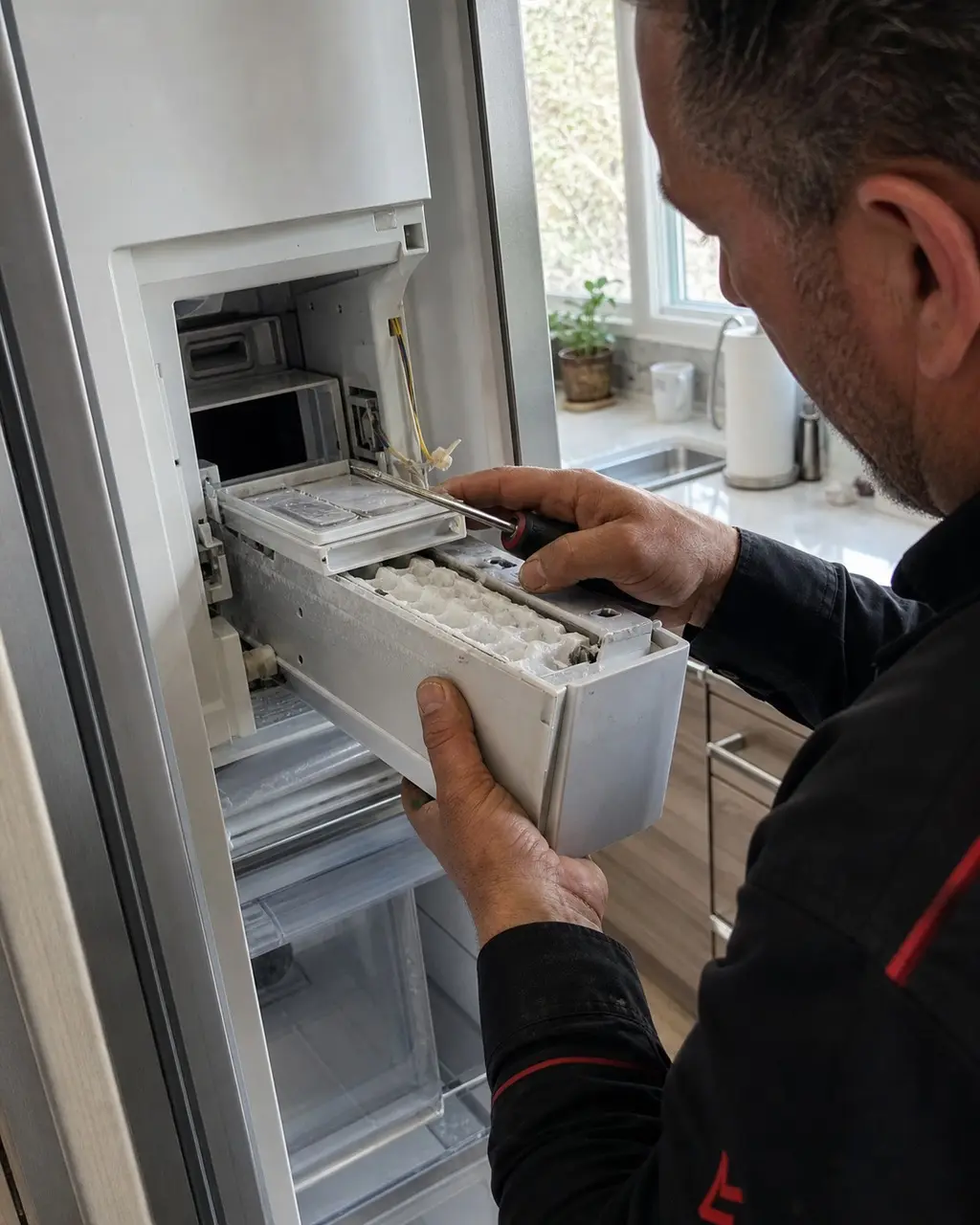
Symptom → likely cause → what to do
A master map of the most common built-in Sub-Zero failures. Find your symptom, read the probable cause, then take the safe action — and open the linked guide where one exists.
| What you see | Likely cause | What to do |
|---|---|---|
| Fridge warm, freezer still cold | Frost-blocked evaporator, failed fresh-food fan, or stuck damper | Stop loading the fridge side; see the not-cooling guide and book before food loss |
| Both compartments warm | Dust-blanketed condenser, condenser fan, or a sealed-system loss | Clear the upper grille; if still warm in an hour, power down and call |
| Runs constantly, never cold enough | Tired door gasket, frost-blocked coil, or low refrigerant charge | Check the seals; avoid opening the door repeatedly while it struggles |
| No ice, or water pooling inside | Failed fill valve, frozen fill tube, clogged line, or ice module fault | Shut the water supply if it is leaking; see the ice maker & water line guide |
| Heavy frost or interior condensation | Defrost system fault, failing door seal, or a humidity/airflow imbalance | Do not chip the frost; note where it forms and book a diagnosis |
| Loud buzzing, clicking, or rattling | Worn condenser or evaporator fan, or failing compressor start components | Stop power-cycling; note the pattern and timing for the technician |
| Wine zone drifts warm or alarms | Stuck condenser fan, clogged coil, or sensor fault in the column | Move bottles if it climbs; see the wine column guide |
| Short-cycling on and off | Failing start relay, compressor, or control board | Do not keep resetting power; that can enlarge a sealed-system repair |
| Temperature alarm or flashing display | Sensor fault or a genuine temperature excursion | Photograph the code, move perishables, and book same-day if possible |
Causes are typical for built-in Sub-Zero units; your exact fault is confirmed on site with pressure and electrical readings.
Open the guide for your problem
Each hub covers the symptom in detail — likely causes, what to avoid, and typical repair ranges for a Cupertino built-in.
Not cooling / warm unit
Warm fridge, split temps, short-cycling or frost — the most common call and where to start.
Learn moreSealed system & compressor
When it really is the refrigeration circuit: leaks, restrictions and worn compressors, proven before quoting.
Learn moreIce maker & water line
No ice, slow ice, or water pooling under the crisper — fill valves, tubes and ice modules.
Learn moreLeaking water
Water on the floor or toe-kick — defrost drain, door gasket, drain pan or water line.
Learn moreStrange noises
Buzzing, clicking, humming, knocking or rattling — and what is normal versus a call-now sound.
Learn moreFreezer not freezing
A freezer that won't hold a hard freeze or is caked in frost — defrost system, fan or sensor.
Learn moreAlarm lights & codes
Temperature alarms, sensor faults and service reminders — what each category means and what to do.
Learn moreWine column
Dual-zone columns drifting warm, alarming or holding the wrong humidity for storage.
Learn moreRefrigerator repair
Full built-in refrigeration service for the fresh-food side of your integrated Sub-Zero.
Learn moreFreezer repair
Freezer drawers and columns that frost over, run warm, or stop making cold.
Learn moreWhat not to do while you wait
A panel-ready Sub-Zero is integrated into custom cabinetry and tied to a sealed refrigeration circuit. Around Apple Park, that often means a six-figure kitchen with a stone surround and a flush fascia. A few well-meant moves turn a small repair into a large one:
- Do not keep power-cycling. Repeated restarts on a failing compressor can damage the start components and the control board.
- Do not force the unit out of its enclosure. Pulling a built-in without releasing it can scratch the fascia or chip stone — that is the expensive part of a Cupertino remodel. Cabinet-safe extraction is part of our process.
- Do not add refrigerant from a kit. A sealed system needs evacuation, a measured charge and a leak proof; guesswork can void the repair and total the unit.
- Do not defrost with heat or sharp tools. You can puncture the evaporator and turn a modest fix into a sealed-system replacement.
- Do not ignore an alarm by clearing it repeatedly. The code helps separate a sensor fault from a real temperature excursion before we arrive.
If a compartment is still warm an hour after you have cleared the condenser grille and freed the interior vents, power the unit down and move perishables. Continuing to run a failing unit is the single most common way a minor fault becomes a sealed-system job.
How a built-in fails — and why patterns matter
Sub-Zero built-ins rarely fail all at once. They drift: a fan slows, a coil collects lint, a gasket tires, a damper sticks. Because each zone depends on precise airflow, the way a unit misbehaves usually points to the cause before anyone opens it. A freezer that stays cold while the fridge warms points at the fresh-food side, not the compressor. A unit that runs nonstop and never cools points at a seal, a frost-blocked coil, or charge.
That is why we diagnose to factory spec rather than guessing. Many units sent elsewhere for a compressor actually need a fan, a sensor or a board — work that follows Sub-Zero service specifications and costs a fraction of a sealed-system job. When the evidence genuinely points to the refrigeration circuit, we prove it with pressures and electrical readings first. Ready to plan a budget? See repair pricing by symptom, or look up your unit with the model & serial guide.
Safe to try yourself vs leave to a pro
A few checks are genuinely safe and often fix the problem. Others risk the sealed system, the control board, or your custom cabinetry — those belong to a built-in specialist.
| Task | DIY-safe? | Why |
|---|---|---|
| Clear the condenser grille | Yes | Vacuuming lint off the upper condenser is the single most useful thing you can do; a dust-blanketed condenser is a leading cause of a warm built-in |
| Check the door seal | Yes | Closing the door on a slip of paper to test the gasket is harmless and tells you if warm air is leaking in |
| Reset power once | With care | One clean power cycle is fine; repeated resets on a failing compressor can damage the start components and the control board |
| Add refrigerant | No | A sealed system needs evacuation, a measured charge and a leak proof; a top-up kit voids the repair and can total the unit |
| Pull the unit out | No | A built-in must be released from its enclosure first; forcing it scratches the fascia or chips stone — the expensive part of a Cupertino kitchen. Cabinet-safe extraction is part of our process |
| Replace a control board | No | Board faults are easily confused with sensor and fan faults; swapping the wrong part wastes a costly board and the real fault remains. We confirm it with factory-spec diagnostics first |
When in doubt, stop after the two safe checks and book a diagnosis — the $89 service call is waived when you book the repair.
How to troubleshoot a Sub-Zero built-in before calling for repair
A quick five-step routine before you call — it often explains the problem.
- 01
Identify the symptom
Note exactly what you see — warm zone, no ice, frost, noise or an alarm code — using the symptom map.
- 02
Check the obvious causes
Clear the condenser grille, free the interior vents, and confirm the unit has power on its dedicated circuit.
- 03
Avoid making it worse
Do not power-cycle repeatedly, force the unit out, add refrigerant from a kit, or chip frost with sharp tools.
- 04
Open the matching guide
Use the dedicated not-cooling, sealed-system, ice-maker or wine-column guide for likely causes and costs.
- 05
Book a factory-spec diagnosis
If a compartment stays warm, power it down, move perishables, and call with your model number ready.
Quick answers before you book
Fast guidance for the questions Cupertino owners ask most when a built-in starts acting up.
Which Sub-Zero problem is the most common?
A unit drifting warm is by far the most common call — usually a frost-blocked evaporator, a tired fan, a stuck damper, or a dust-blanketed condenser rather than the compressor. Start with the not-cooling guide.
Can I keep running my Sub-Zero while it acts up?
Only if it is still holding temperature. If a compartment stays warm an hour after you clear the condenser and vents, power it down and move perishables — running a failing unit is how a small repair becomes a sealed-system job.
Is a noisy Sub-Zero serious?
It depends on the noise. Buzzing or rattling from a fan is routine and inexpensive; a hard clicking that repeats with no cooling can mean failing compressor start components. Note when the sound happens — that detail speeds up the diagnosis.
Do you charge to tell me what is wrong?
The diagnosis is an $89 service call, waived when you book the repair. You get a written quote first, we install genuine OEM Sub-Zero parts, and every repair carries a 365-day labor warranty.
What Cupertino homeowners say
Used this troubleshooting page to figure out our built-in was short-cycling, not dying. They confirmed a failing start relay rather than the compressor another shop quoted, fixed it the same visit, and the $89 call came off the bill. Saved us a fortune.
Our 36-inch panel-ready unit was buzzing loudly and the fridge side warmed up. The symptom map pointed at the evaporator fan and that is exactly what it was. Genuine OEM part, cabinetry untouched, and a 365-day warranty on the work. Calm and honest from start to finish.
Water was pooling under the crisper and the ice maker had quit. They traced it to a frozen fill tube and a tired valve, cleared and replaced both, and showed me how to spot it early next time. Floors protected the whole visit and a fair written quote up front.
Frequently asked questions
What are the most common Sub-Zero problems?
The frequent ones are a unit drifting warm (frost, fans, dampers or a dusty condenser), ice-maker and water-line faults, heavy frost or condensation, unusual fan and compressor noise, and temperature alarms. Most are airflow or control issues rather than the sealed system. Match your symptom in the table above, then open the dedicated guide for likely causes and typical costs.
How do I know if it is the sealed system or just a fan?
You usually cannot tell by symptom alone, which is the point of a proper diagnosis. A warm unit that still runs and circulates air often has a fan, damper or board fault. A true sealed-system failure is confirmed only with pressure and electrical readings. We prove it before quoting, because sealed-system work is the most expensive category.
My Sub-Zero is making noise but still cold. Should I worry?
Not always. A worn condenser or evaporator fan can buzz or rattle while the unit still cools, and that is an inexpensive fix caught early. A repeating hard click with poor cooling is more serious and points to compressor start components. Note the timing and book a diagnosis before a fan failure stresses the rest of the system.
Why is my Sub-Zero leaking water or forming frost?
Water pooling inside often traces to a clogged drain, a frozen fill tube, or a failing ice-maker fill valve. Heavy frost usually means a defrost-system fault or a tired door seal letting humid air in. Do not chip the frost — you can puncture the evaporator. Note where it forms and book a visit so the right part is on the van.
Can you come same-day for a Sub-Zero problem in Cupertino?
Often, yes. We hold same-day and next-day windows for Cupertino and nearby cities like Sunnyvale, Saratoga and Los Altos when the schedule allows. Call early with your model number ready, and if a compartment is warm, power it down and move perishables while you wait for the fastest possible visit.
What does it cost to diagnose a Sub-Zero issue?
The service call is $89 and is waived when you approve the repair. You receive a written quote first, we use genuine OEM Sub-Zero parts, and every repair is backed by a 365-day labor warranty. See repair pricing for draft ranges by symptom.
Related Sub-Zero help

Found your symptom? Let’s confirm the real fault.
Talk to a built-in specialist now. Same-day and next-day diagnosis across Cupertino and the South Bay when the schedule allows.
925 reviews · 4.9 / 5$89 service call, waived when you book the repair · 365-day warranty on all labor.