
Sub-Zero wine cooler repair in Cupertino
Built-in and under-counter wine coolers hold a tighter window than a beverage fridge. When yours runs warm, sweats, or buzzes, a small part is usually behind it.
If your Sub-Zero wine cooler is not cooling, running warm, or only chilling one zone, the cause is usually a circulation fan, a stuck damper, a drifting sensor, a tired door seal, or a clogged condenser — rarely the compressor. Under-counter coolers hold a controlled humidity and temperature, so faults surface quickly. We diagnose under-counter and dual-zone Sub-Zero coolers to factory spec for an $89 service call that is waived when you book the repair, fit genuine OEM Sub-Zero parts, and back the work with a 365-day labor warranty.
925 reviews · 4.9 / 5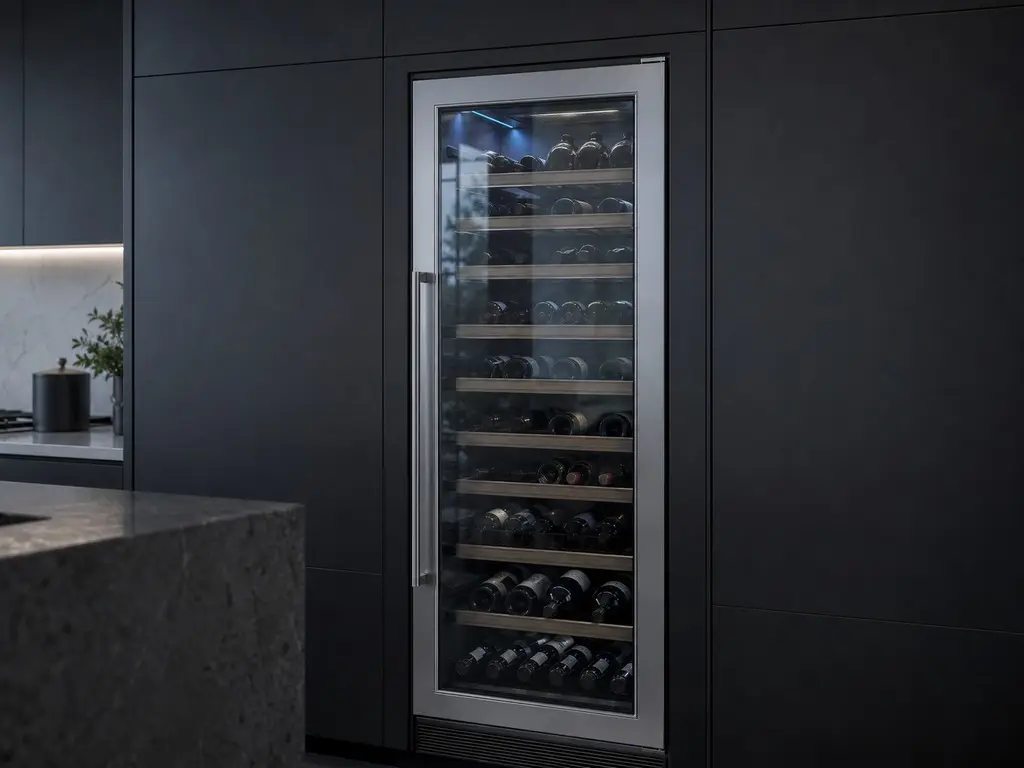
How a wine cooler differs from an ordinary fridge
A Sub-Zero wine cooler is not just a cold box. Under-counter and built-in coolers run a higher, controlled humidity than a refrigerator and hold a narrower temperature window so corks stay tight and bottles age the way they should. Many are dual-zone, with a warmer reds setting up top and a cooler whites or sparkling zone below. That precision is why a fault you might ignore in a kitchen fridge — a slightly weak fan or a slow sensor — shows up fast as a warm zone or sweating glass.
Most cooler problems come down to a handful of parts, and only one of them is costly:
- Not cooling at all. A cooler that runs but never gets cold is often a clogged condenser, a failed condenser fan, a control fault, or — less often — a low refrigerant charge that needs sealed-system work to confirm.
- One zone warm on a dual-zone cooler. When the lower zone holds but the upper drifts (or vice versa), the usual culprits are a circulation fan, a stuck damper, or a drifting thermistor — not the sealed system.
- Condensation inside. Some interior moisture is normal at wine humidity, but persistent sweating on the glass or shelves points to a tired door seal, a blocked drain, or a humidity-control fault.
- Noisy compressor or fan. A new buzz, rattle, or vibration usually traces to a worn fan bearing, loose grille, or an aged compressor mount — worth quieting before it disturbs sediment.
- Control or display issues. Set points that will not save, a dark panel, or a single-zone alarm are typically the electronic control rather than the refrigeration circuit.
If your unit is a full-height, panel-ready integrated column rather than an under-counter cooler, our dedicated wine column service covers IW-30 and 424/427 storage. This page is for the under-counter and built-in coolers that tuck into island runs and butler's pantries across Cupertino remodels near Apple Park and Main Street.
Symptom → likely cause → what to do
Match what your wine cooler is doing to its most probable fault before bottles warm up.
| What you see | Likely cause | What to do |
|---|---|---|
| Cooler runs but never gets cold | Clogged condenser, condenser fan, control fault, or low charge | Vacuum the front grille first; warm an hour later means call us |
| Upper zone warm, lower zone fine | Circulation fan, stuck damper, or drifting thermistor | Shift the reds down to the steady zone and flag which side slipped |
| Glass and shelves sweating inside | Tired door seal, blocked drain, or humidity-control fault | Towel it dry, press-test the gasket, and open the door less often |
| New buzz, rattle, or vibration | Worn fan bearing, loose grille, or aged compressor mount | Have it looked at before the shaking stirs up sediment |
| Set point won't save / display dark | Electronic control board or display module fault | Snap a photo of the panel and stop pulling power to reboot it |
| Single-zone temperature alarm | Sensor fault or a genuine temperature excursion | Capture the code, relocate the bottles, and grab a same-day slot |
These are the faults we see most on under-counter and dual-zone Sub-Zero coolers; we pin down yours in person with factory-spec diagnostics.
What to check before you call
Four safe checks that take a few minutes and often explain a warm or sweating cooler.
- 01
Confirm power and set points
Check the cooler has power and that each zone is set where you expect — a bumped touch panel is a surprisingly common false alarm.
- 02
Clear the condenser grille
Open the front grille and look for a dust-blanketed condenser. Remodel lint and pet hair choke airflow and warm the whole cabinet.
- 03
Test the door seal
Close the door on a slip of paper; if it slides out with no drag, a flattened gasket may be letting warm kitchen air leak in.
- 04
Note the behavior
Jot down which side is drifting, plus any humming, sweating, or codes on the display. Sharing that up front lets us narrow the fault before we arrive and bring the matching part along.
Cabinet-safe service in a built-in kitchen
An under-counter Sub-Zero cooler is usually framed into a custom cabinetry run and tied to a sealed refrigeration circuit. In a Cupertino kitchen the risk is rarely the part — it is the surroundings. A cooler slid out without releasing it cleanly from its enclosure can scuff a custom panel or chip a stone countertop edge, and that is the expensive part of the kitchen, not the fan or sensor.
Sliding a cooler out and resetting it flush is something we do to the maker's playbook, with the floor and any adjacent stone shielded so the finished run still looks like one unbroken stretch of cabinetry. We carry the tools the job calls for and close it out with genuine OEM Sub-Zero parts. Now and then a diagnosis traces the trouble back to the refrigeration loop itself, which moves the job over to sealed system & compressor service — but for under-counter coolers that result is the exception, not the rule.
An hour after you have vacuumed the condenser and double-checked each set point, if a zone is still sitting warm, shift your bottles somewhere steady and schedule a diagnosis. Leaving a cooler to run on a weak fan or a low charge is exactly how a small fix turns into a big one.
What a wine cooler repair typically costs
Most cooler repairs are fans, sensors, seals, or control parts. The $89 diagnostic is waived when you book the repair, and every job carries a 365-day labor warranty.
| Service | Range | Time | Notes |
|---|---|---|---|
| Diagnostic / service call | $89 | 45–90 min | Waived when you book the repair — model, temps, airflow, fascia/panel check |
| Door gasket / frost-line | $400–$950 | 1–3 h | Depends on model and gasket availability |
| Ice maker / water line | $290–$880 | 1–3 h | Valve, fill tube or ice module |
| Panel-ready pull-out & reseat | $250–$600 | 1–2 h | Cabinet-safe extraction, no fascia damage |
| Control board / sensor | $360–$1,300 | 1–4 h | Quote after electrical proof |
| Compressor / sealed system | $1,500–$3,800 | 2–6 h + parts | Requires pressure / electrical evidence |
Draft ranges for planning; final quote depends on model, parts, cabinet access and diagnosis.
Quick answers on wine cooler repair
Fast answers to what Cupertino owners ask most about under-counter and dual-zone Sub-Zero coolers.
Why is my Sub-Zero wine cooler not cooling?
A cooler that runs but never gets cold is most often a clogged condenser, a failed condenser fan, or a control fault — and sometimes a low refrigerant charge. Start by clearing the front grille of dust. If it is still warm an hour later, book a diagnosis before bottles warm up; we confirm the cause with factory-spec readings before quoting anything.
Is a wine cooler repair different from a wine column repair?
Yes. An under-counter or built-in wine cooler is a smaller, often dual-zone unit that tucks into a cabinetry run. A full-height integrated column like the IW-30 or 424/427 holds tighter tolerances and runs near-silent to protect sediment. Those are covered on our separate wine column service page.
Is some condensation inside the cooler normal?
A little is, because wine coolers run a higher, controlled humidity than a fridge. Persistent sweating on the glass or shelves usually means a tired door seal, a blocked drain, or a humidity-control fault — all repairable without touching the sealed system in most cases.
Do you service both single and dual-zone coolers?
Yes. We diagnose and repair under-counter and built-in Sub-Zero wine coolers in single and dual-zone configurations. Have your model number ready and we will confirm the right genuine OEM Sub-Zero parts before the visit.
What Cupertino homeowners say
Our under-counter Sub-Zero wine cooler ran all day but never got cold. The tech found a condenser packed with remodel dust and a weak condenser fan, cleared and replaced the fan the same visit, and it has held temperature since. The $89 call came right off the bill.
Dual-zone cooler in our island had the upper reds zone drifting warm while the lower zone was fine. Turned out to be a stuck damper, not the compressor a previous quote claimed. Honest diagnosis, genuine OEM part, and they slid the unit out without a mark on the cabinetry.
The glass door of our built-in cooler kept fogging up inside and a couple of labels started lifting. They traced it to a tired door gasket and a partly blocked drain, fixed both, and explained the humidity side. The 365-day labor warranty made it an easy decision.
Frequently asked questions
Why is my Sub-Zero wine cooler not cooling?
A cooler that runs but stays warm is usually a clogged condenser, a failed condenser fan, a control fault, or a low refrigerant charge. Clear the front grille of dust first. If it is still warm an hour later, book a diagnosis before bottles warm up. We prove the cause with factory-spec diagnostics for an $89 service call, waived when you book the repair, before quoting.
Why is one zone warm on my dual-zone wine cooler?
When one zone drifts while the other holds steady, the sealed system is usually fine — the fault is typically a circulation fan, a stuck damper, or a drifting thermistor. Note which zone is warm and move those bottles somewhere stable. We confirm with factory-spec readings before recommending any sealed-system work.
There's condensation inside my wine cooler — is that a problem?
A faint film of moisture is expected — these coolers deliberately keep humidity higher than a kitchen fridge to keep corks from drying out. What is not normal is steady sweating that beads on the glass or pools on the shelves; that typically traces to a gasket gone flat, a drain that is plugged, or the humidity control acting up. In most cases we can put all three right without ever opening the sealed system.
My wine cooler has started buzzing or vibrating — does it matter?
It is worth addressing. A new hum, rattle, or vibration usually points to a worn fan bearing, a loose grille, or an aged compressor mount. Beyond the noise, ongoing vibration can unsettle sediment in aging bottles. Quieting it is a genuine repair, and we use genuine OEM Sub-Zero parts backed by a 365-day labor warranty.
The display or set points on my cooler stopped responding — what's wrong?
A panel that has gone blank, set points that refuse to stick, or one zone throwing an alarm point far more often to the electronic control board than to anything in the cooling system. Take a picture of whatever the screen shows, resist the urge to keep yanking the power to force a reset, and get a diagnosis on the books. We install genuine OEM Sub-Zero control parts and stand behind the labor for 365 days.
What does a wine cooler diagnosis cost in Cupertino?
The service call is $89 and is waived when you approve the repair. You get a written quote first, we use genuine OEM Sub-Zero parts, and every repair carries a 365-day labor warranty. Call (650) 668-5618 or book online with your model number ready for the fastest visit across Cupertino and nearby cities.
Related Sub-Zero help

Wine cooler running warm? Let's stabilize it.
Talk to an experienced Sub-Zero repair specialist. Same-day and next-day diagnosis on under-counter and dual-zone coolers across Cupertino and the South Bay when the schedule allows.
925 reviews · 4.9 / 5$89 service call, waived when you book the repair · 365-day warranty on all labor.