
Sub-Zero leaking water in Cupertino? Find the source before the floor pays for it.
A built-in does not have a drain you can see. Water shows up on the floor long after it started pooling inside the cabinet — so the first job is naming where it is coming from.
A leaking Sub-Zero is almost never a sealed-system problem. The water is plain condensate or supply water that has escaped its normal path: a frozen or clogged defrost drain, condensation from a tired door gasket, an overflowing or cracked drain pan, or the ice-maker fill line. Stop running the unit if water is actively spreading, lay towels to track where it pools first, and book a diagnosis. We trace the leak to its real source for an $89 service call that is waived with the repair, with a 365-day labor warranty.
925 reviews · 4.9 / 5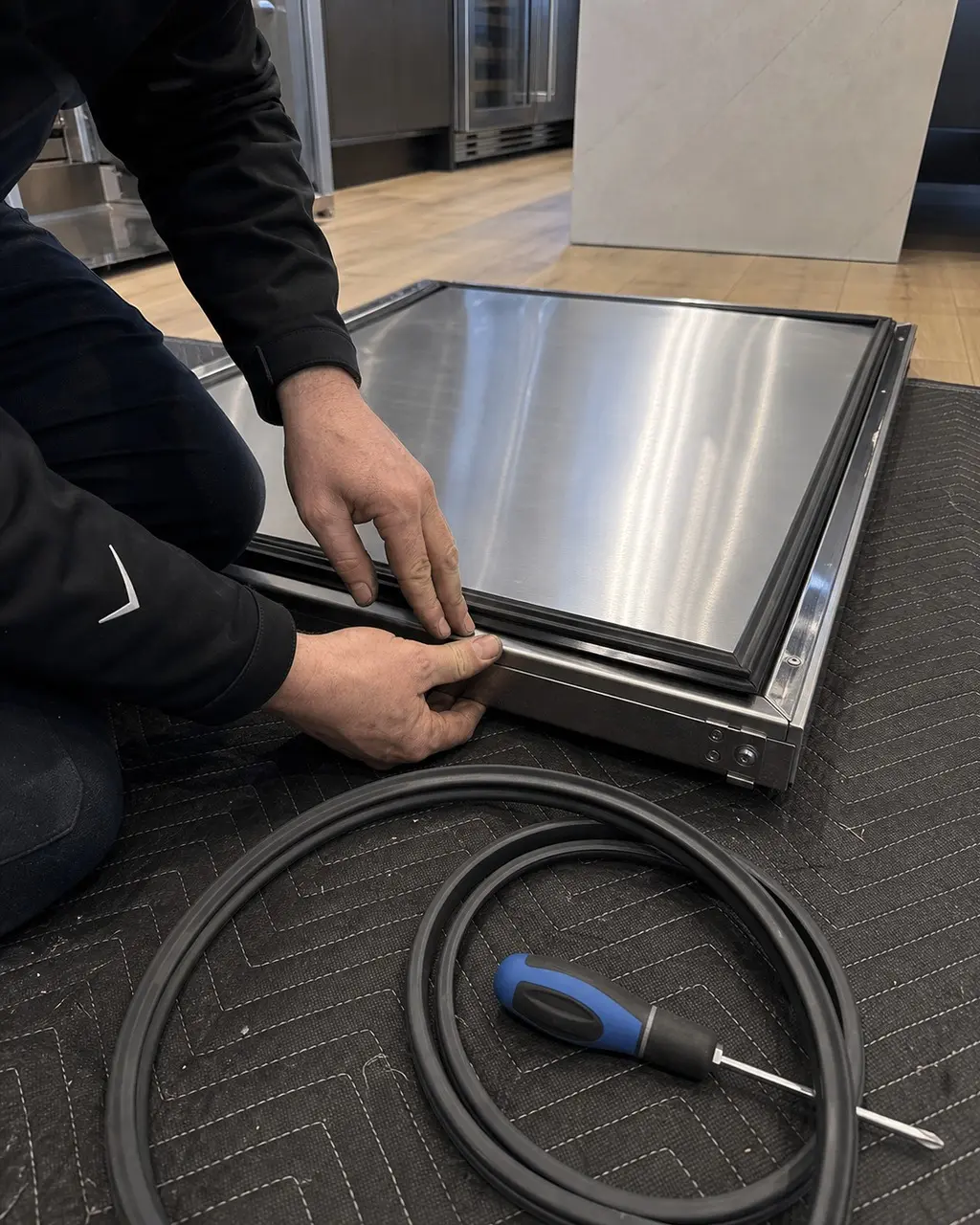
Why a leak hides so long in a Cupertino built-in
On a freestanding refrigerator a leak puddles in plain view and you mop it up. An integrated Sub-Zero is a different animal. It sits flush inside a custom cabinet base, often over engineered hardwood or a continuous stone floor that runs straight under the toe-kick. When water escapes inside that cabinet it has nowhere to go but down and sideways — wicking under the unit and into the subfloor where nobody sees it for weeks.
That delay is the whole reason a small Sub-Zero leak becomes an expensive flooring claim in homes around Monta Vista, Garden Gate and the remodels near Apple Park. By the time a homeowner notices a damp toe-kick or a faint cupping in the planks, the leak has usually been running for a while. So the instinct to keep wiping the floor and carry on is exactly the wrong move: the water you can see is a fraction of what is pooling out of sight.
If water is actively spreading, shut off the unit's water supply valve, move anything stored at the base of the cabinet, and stop running the ice and water dispenser until the source is found. Towels on the floor are not a fix — they hide the evidence of where it is leaking from.
Where the water is coming from → what it means → what to do
Four sources cause nearly every Sub-Zero leak. Match where the water first appears to the most likely cause.
| Where the water shows | Likely source | What to do |
|---|---|---|
| Puddle at the front toe-kick, freezer side | Frozen or clogged defrost drain backing up the drain trough | Stop force-defrosting; book a drain clear before it refreezes and overflows |
| Water beading or running down the inside walls | Door gasket leaking warm, humid air that condenses inside | Check the seal against a slip of paper; a gasket or hinge fix usually stops it |
| Wet under the lower grille / base | Overfilled, tilted, or cracked drain (evaporation) pan | Do not pull the unit yourself; the pan and its drain need to be inspected together |
| Pooling under the crisper or near a fitting | Ice-maker fill valve or braided water line weeping | Shut the supply valve; see ice maker & water line for that specific fault |
| Damp subfloor or cupped planks, no visible source | A slow leak that has been wicking under the cabinet base | Power down, move perishables, and book same-day — the floor is now the priority |
Leak paths are typical for built-in Sub-Zero units; your exact source is confirmed on site before any part is replaced.
Five safe checks before you call
None of these require pulling the unit. They take a few minutes and often name the source for you.
- 01
Find where it pools first
Dry the floor completely, lay a paper towel along the toe-kick, and watch where it dampens first. Front-freezer side points to the defrost drain; a side fitting points to the water line.
- 02
Read the door gasket
Close the door on a slip of paper and pull. If it slides out with no drag along the bottom corner, a tired gasket is letting humid Cupertino kitchen air condense inside.
- 03
Check the interior drain hole
On the freezer floor or rear wall, look for the small defrost drain opening. A cap of ice over it means the drain is frozen and condensate is backing up.
- 04
Shut the water supply
If the leak is near a fitting or under the crisper, close the saddle or quarter-turn valve feeding the unit. This isolates an ice-maker or water-line leak immediately.
- 05
Note timing and volume
Is it constant, or only after a defrost cycle or an ice drop? A leak that appears on a schedule tells the technician which system to open first.
The South-Bay hard-water angle on the defrost drain
The single most common leak we trace in Cupertino is a defrost drain that has stopped draining. Every built-in runs a periodic defrost cycle; the melt water is supposed to run down a small trough, through a drain tube, and into a pan near the compressor where it evaporates. Santa Clara Valley tap water is moderately hard, and over years that mineral content — plus the ordinary grease and food film that drifts down — narrows the drain opening.
Once the drain slows, melt water from each defrost cycle has nowhere to go. It pools in the trough, refreezes into a growing slab, and eventually overflows the front lip and runs out under the freezer door — usually onto the toe-kick and the hardwood beyond it. Owners often mistake this for a sealed-system failure because they see ice and water together, but the refrigeration is fine; the plumbing inside the cabinet is simply blocked.
Clearing and flushing the drain, then confirming the tube and pan are sound, fixes the majority of these calls without any refrigeration work at all. If the original leak has already crusted the heater area with ice, we clear that too so it does not refreeze the week after we leave.
What not to do with a leaking built-in
An integrated column is heavy, tied to a water line, and wedged into finished cabinetry and stone. A few well-meant reactions make the repair — and the cleanup — much bigger:
- Do not keep mopping and running it. Wiping the visible water just hides where it is coming from while the hidden pool keeps soaking the subfloor.
- Do not pull the unit out yourself to look behind it. Dragging a built-in over a stone or engineered-wood floor without releasing it from the enclosure scratches the fascia and chips the very flooring you are trying to save.
- Do not chip the ice off a frozen drain with a sharp tool. The defrost heater and drain heater sit right there — a puncture turns a drain clear into a parts repair.
- Do not ignore a faint musty smell. On a built-in over hardwood, that often means water has already reached the subfloor and the leak is older than it looks.
If you cannot tell where the water is starting and it keeps returning, power the unit down, move perishables to a cooler, and book a same-day or next-day visit. On an integrated install over finished floors, an unknown leak is worth treating as urgent.
What a leak repair typically costs
Most leaks are a drain clear, a gasket, or a water-line fitting — not refrigeration. The $89 diagnostic is waived when you book the repair.
| Service | Range | Time | Notes |
|---|---|---|---|
| Diagnostic / service call | $89 | 45–90 min | Waived when you book the repair — model, temps, airflow, fascia/panel check |
| Door gasket / frost-line | $400–$950 | 1–3 h | Depends on model and gasket availability |
| Ice maker / water line | $290–$880 | 1–3 h | Valve, fill tube or ice module |
| Panel-ready pull-out & reseat | $250–$600 | 1–2 h | Cabinet-safe extraction, no fascia damage |
| Control board / sensor | $360–$1,300 | 1–4 h | Quote after electrical proof |
| Compressor / sealed system | $1,500–$3,800 | 2–6 h + parts | Requires pressure / electrical evidence |
Draft ranges for planning; final quote depends on model, parts, cabinet access and diagnosis.
What Cupertino homeowners say
Found a damp toe-kick under our integrated column and panicked about the hardwood. They traced it to a frozen defrost drain in twenty minutes, cleared and flushed it, and showed me the ice slab that had been overflowing. No refrigeration work needed and the $89 came off the bill.
Water kept appearing under the crisper. Turned out to be a weeping fill valve, not the sealed system another company quoted. They shut the supply, replaced the valve with a genuine part, and checked the whole line. Floors saved, honest call.
Our 42-inch built-in near Apple Park was beading water down the inside wall. They diagnosed a gasket that had gone stiff at one corner, replaced it, and reseated the custom panel flush. The condensation stopped completely and there was zero damage to the cabinetry.
Frequently asked questions
Why is my Sub-Zero leaking water onto the floor but the food is still cold?
That combination almost always rules out the sealed system — the refrigeration is working, so the water is condensate or supply water that has escaped its normal path. The usual culprit is a frozen or clogged defrost drain backing up, a tired door gasket letting humid air condense inside, or an ice-maker line. Because the unit still cools, this is typically one of the less expensive repairs if it is caught before the floor is damaged.
Is water under my built-in an emergency?
On an integrated unit over engineered hardwood or stone, treat it as urgent. The cabinet base traps water against the floor and subfloor, so a slow leak can damage flooring long before you see a puddle. Shut the unit's water supply, stop the dispenser, move anything perishable, and book the soonest available visit.
How do I tell a defrost-drain leak from an ice-maker leak?
Watch where the water appears first. A defrost-drain backup pools at the front toe-kick on the freezer side, often with a slab of ice in the bottom of the freezer. An ice-maker or water-line leak shows up nearer a fitting or under the crisper and usually involves a fill valve or braided line. Shutting the supply valve stops the second kind but not the first.
Can hard water really clog a Sub-Zero drain in Cupertino?
Over time, yes. Santa Clara Valley water is moderately hard, and mineral content plus ordinary food film slowly narrows the small defrost drain opening. Once it cannot keep up with the melt water from each defrost cycle, the trough overflows and runs out the front. Clearing and flushing the drain is the fix, and an annual check keeps it from recurring.
Will you have to pull the unit out to fix a leak?
Often not. Many leaks — a frozen drain, a gasket, a clogged trough — are reached from the front. When a drain pan or a rear fitting is involved we do a cabinet-safe pull-out, protecting the floor and the custom fascia and reseating the unit flush afterward. You always get a written quote before any of that begins.
What does the diagnosis cost?
The service call is $89, and it is waived the moment you approve the repair. You get a written quote before any work, we install genuine OEM Sub-Zero parts, and every repair carries a 365-day labor warranty. See repair pricing for planning ranges by symptom.
Related Sub-Zero help

Water where it should not be? Let's find the source today.
Talk to a built-in specialist now. Same-day and next-day leak tracing across Cupertino and the South Bay when the schedule allows.
925 reviews · 4.9 / 5$89 service call, waived when you book the repair · 365-day warranty on all labor.